My 11 Golden Rules for Copywriting

Hi, I'm Eric.

Thought it might be good to give you an idea of who I am. I’m an Editor for Newsweek. I work on content for brands like Speedo, Hugo BOSS, and Coursera. The content from my team goes out to 100,000+ people each week, and brings in 5 figures of revenue each month. I’ve been a professional Editor and digital marketing consultant for 5+ years.

This list is useful for

  • Freelance writers,
  • Any businesses doing content marketing (including any digital marketing agency),
  • Anyone looking to get better at copywriting,
  • And anyone who is outsourcing their writing to someone on Fiverr or elsewhere.

The List

I created this list because these things keep popping up when I work with writers for the first time. They’re also great guidelines for me to check my work against. There are more guidelines that I use, but these are a great start. If you want examples of each rule, and more guidelines and tools that I use, here’s an email box if you’d like me to send you the full thing.

Hope it’s useful!

My 11 Golden Rules

1. Avoid generalizations that could offend any particular group.


2. For any product, unless the brand makes explicit claims, always soften claims with ‘helps to’, ‘aims to’, etc.


3. Make sure each body paragraph has a distinct point that doesn’t overlap too much with any other paragraph. If writing is repetitive, it usually doesn’t engage or convert readers.


3. If you use “as” (as in “as we know”), “amazing”, “get”, “nice”, “bad”, or “!”, find a more precise and descriptive way to say what it is you want to say.


5. Make sure all numbered or lettered lists are consistent and correct ^


6. “How something looks”, or “What something looks like”. Not “How something looks like”.


7. When making a claim, mention a resource or statistic that is critical to the contention of the piece. Please provide a link to a reputable source, not just another website. 


8. Use active voice instead of passive voice when possible, and do so if you have an equal choice between the two. There may be contexts where a passive voice flows better, but make it a practice to consider. 


9. When you’re done, imagine you are seeing this article for the first time and you are searching for the keywords. If the first paragraph:

– doesn’t make you want to read more, or 

– doesn’t make you feel good, or 

– doesn’t make sense, or 

– if it makes you identify with something that you might be insecure about in a negative way,

– or if it could come across as patronizing or judgemental,


rewrite it. 


10. Double check that every mention of the brand name, prices, and products are exactly what the client sent, or what is on their website.


11. Please run it through Grammarly and accept the suggestions that make sense.

Proven results

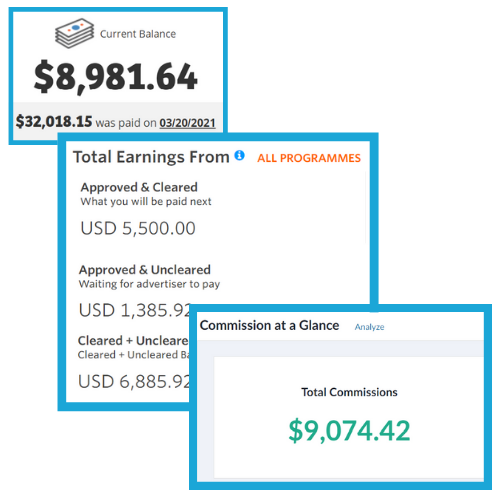
By sticking to these guidelines and developing more, I’ve been able to drive great outcomes for the companies I work for, my freelance clients, and also in affiliate marketing. Currently, the content I use this on routinely generates over 100k organic views per month, and 5 figure months on Shareasale, Commission Junction, and other affiliate networks.

Everyone needs great copy. This means a great set of rules that develop over time, and great tools to support that copy. 

But great copy is only half the work

I’ve written and consulted for companies, working to make their sales copy great. Even then, they didn’t always get the results they expected. Their problems were in other areas, specifically:

Quality of Traffic

SEO & Competitor Research

Sales Funnel Construction

Great copy is the foundation of all three, but to drive results online, these three things need to be sorted out. There are tools that I use and recommend that make this so much easier. I’m making a “Tools & Resources” section of this website, but in the meantime, I’ve put the most important ones in the download.

If you'd like the full list of guidelines and tools, I'll send it to you via email here: